Polynesian tattooing is an ancient, highly complex tradition. One of the greatest mistakes modern tattoo artists make when approaching this style is viewing it through a Western lens—treating it as just another visual art form.
It is not.
To understand how Polynesian tattoo design works, it helps to compare it to written language. Western languages use alphabets where individual letters have sounds but no inherent meaning; we assemble those letters to create words. Eastern ideograms, however, work differently: every symbol carries its own distinct meaning, which can shift when paired with other symbols. Furthermore, the position and frequency of a symbol dictate its meaning just as much as the symbol itself.
For instance, in Japanese writing, repeating a single character for "tree" transforms the ideogram into the word for "grove" or "forest."
The ideogram of a single woman under a roof means "peace", while placing two women side by side was formerly used for "quarrel."
Trying to select individual Polynesian symbols out of their context makes as little sense as choosing ideograms based on how they sound—often with the same results.
Myth 1: Symbols Have Absolute, Universal Meanings
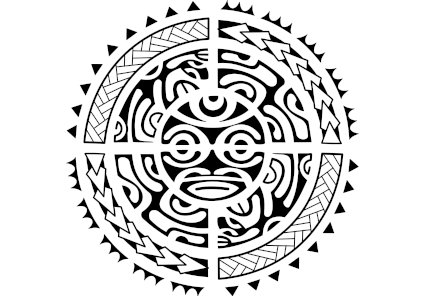
While Polynesian tattoo symbols are usually associated with a primary meaning, that meaning is never absolute or universal. A single symbol can mean completely different things across different island cultures; an element used for protection on one island might be actively avoided on another for that exact reason.
This is why studying the specific culture behind the symbols is important. Modern Polynesian tattoos frequently blend elements from various traditions together. While this blended approach works beautifully for non-Polynesians as a sign of appreciation, individuals with Polynesian roots should seek out a native practitioner from their specific region. A local artist may know symbols and layouts that relate directly to their particular ancestral home or clan.
Take the tiki, for example. It is recognized across Polynesia as a symbol of protection, but it can represent a divinity, a deified ancestor, or a guardian depending entirely on how it is integrated and what elements surround it. Similarly, birds can symbolize a voyage, a higher perspective, a divine messenger, or members of a shared journey. Because these meanings are so fluid and contextual, it is virtually impossible for an outsider to look at a tattoo and decipher the exact story it tells.
A Tip for Better Tattoos: Beyond the "Tattoo Dictionary"
When planning your custom piece, it is tempting to look at individual symbols online like entries in a dictionary, trying to piece them together word-for-word. While resources like our dictionary are useful, they are only the first step in your voyage and you should look at the design as a whole. Instead of bringing a rigid list of disconnected symbols to your artist, try sharing the overall emotional theme or life story you wish to express. This gives an experienced designer the freedom to weave the symbols together harmoniously, ensuring the entire layout is balanced and cohesive.
Myth 2: Layout and Position Do Not Matter
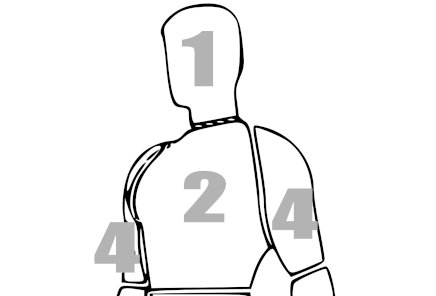
The physical placement of a symbol—both its location on the body and its orientation—influences its meaning.
- The Lower Body: Areas closer to the earth are traditionally associated with material life. For example, an enata (human figure symbol) placed here usually represents an ordinary person.
- The Upper Body: Areas closer to the sky relate to the spiritual realm and higher matters. The exact same enata symbol placed on the upper body can represent a hero, an ancestor, or a chief.
Myth 3: You Can Just "Paste" Symbols Together
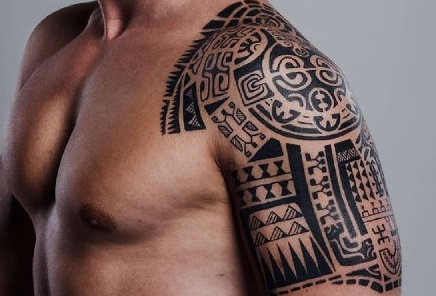
Just like spoken language, a tattoo composition can be elegantly structured or completely disorganized. To an educated eye, a poorly planned tattoo looks as unpolished and inexperienced as a clunky sentence sounds to a native speaker.
Do not simply put symbols together because their individual definitions match the words you want to express. While those symbols might hold that meaning when isolated, a larger tattoo is defined by the interaction and flow between the elements.
Advice for Artists: Always design with the final, complete narrative in mind. When writing a sentence, you don't just throw words onto a page as they pop into your head; you organize them into a logical sequence to convey a clear message. Treat a Polynesian tattoo the exact same way. Before applying individual elements, map out how they will connect to ensure the overall message is preserved.
Respecting the Boundaries
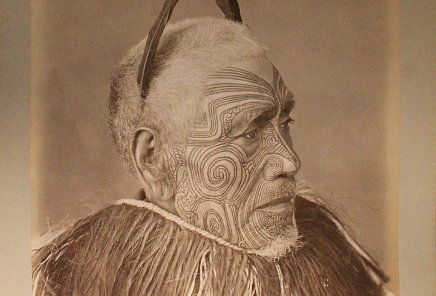
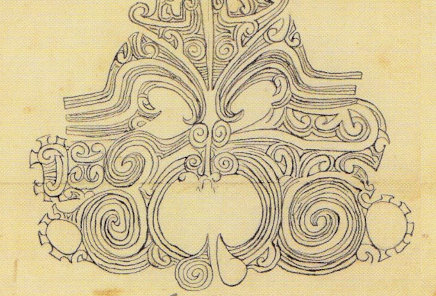
This art form is deeply connected to community structure and genealogy. Historically, certain elaborate motifs or highly specific placements—such as the sacred facial tattoos of Māori Ta Moko—were reserved exclusively for individuals who achieved unique milestones or held high ancestral rank within their clan.
Understanding this aspect allows us to approach the art form with respect. For non-Polynesians, choosing beautifully universal motifs (like waves for life's journey, or shark teeth for strength) is the right way to honor the culture safely. Embracing these respectful boundaries ensures your tattoo carries a positive energy that tells your own personal story with integrity.
A Final Note on Composition
The Power of the Un-inked Canvas
Beyond the symbols themselves, authentic Polynesian tattoos strictly adhere to the rules of balance, breath, and flow. The exact same message can be expressed in vastly different ways. It is the difference between an essay written by a nine-year-old and a masterpiece crafted by an accomplished author—and to anyone who knows the culture, the difference will always stand out.
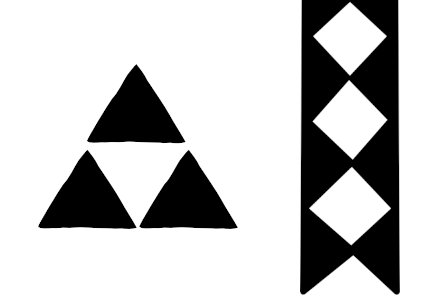
An essential part of layout and positioning is the use of negative space—the areas of skin left untouched by ink. In traditional tattooing, these spaces are just as deliberate and meaningful as the black patterns themselves. For instance, in the Hawaiian concepts of lokahi and kuhanu, negative space represents light emerging from darkness, bringing harmony to a bold design. Giving your tattoo room to "breathe" ensures that the patterns don't crowd one another, resulting in a striking, balanced piece that looks magnificent from a distance and holds its sharp detail over time.
Understanding the linguistic nature of tatau changes everything. It transforms a collection of geometric choices into a meaningful narrative you can proudly wear.